From Bench Sketches to Factory Floors: The Evolution of Laser Marking Fume Extraction
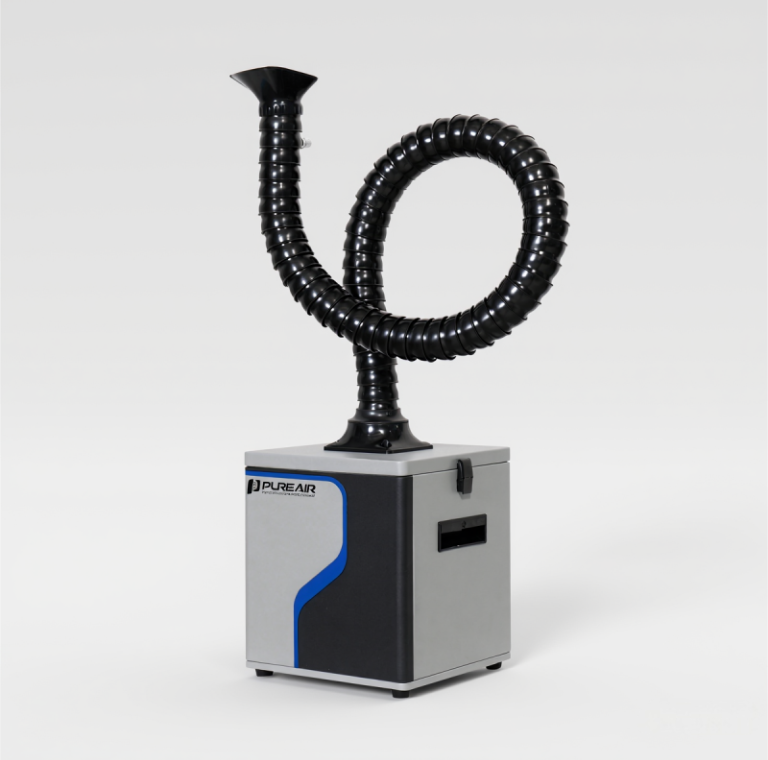
Introduction — a quick scene, a number, a question
I remember standing by a small marking bench, watching a thin plume curl away from the workpiece — annoying, harmless, right? In many shops today a dedicated laser marking fume extractor sits right beside the laser, yet studies show that poor extraction still allows up to 30% of ultrafine particles to escape into the workspace (OSHA and local surveys vary). So, how do we move from "it kind of works" to truly clean air around marking stations?
I'm writing this as someone who talks to users every day; I want to help you spot real risks and real solutions. In the next sections I’ll dig into where typical setups fail, and what to look for next — step by step.
Part 2 — Why many traditional systems miss the mark
I often ask customers about their laser coding machines and get the same two answers: “we capture some smoke” and “we still smell things sometimes.” The harsh truth is that many established extractors were sized for visible smoke, not ultrafine particles or vapors from plastics and coatings. Older designs rely heavily on bulky HEPA filters and simple activated carbon beds but ignore real flow dynamics in the booth or fume hood. That mismatch causes leaks, re-entrainment, and uneven capture velocity. Look, it’s simpler than you think — poor ductwork layout and underpowered fans (or mismatched power converters) often do more harm than good.
Why do older extractors fail?
From my experience, failure usually comes from three places: wrong capture point, aging filters, and neglected airflow balance. Technicians install a unit and assume the job is done. But if the plume from your process doesn’t enter the hood at source, the machine can’t do its job. HEPA filters clog. Activated carbon saturates. Fans lose static pressure. Edge computing nodes or simple control boards won't save you when the basic physics are ignored. I see it all the time — and it’s fixable, with clearer diagnosis and better design choices.
Part 3 — Looking forward: principles and practical metrics
Now let’s look ahead. New systems take a systems approach: capture-first design, matched fan curves, staged filtration (pre-filter + HEPA + carbon), and smarter monitoring. When we pair those better extractors with modern laser coding machines, the results are obvious — lower particle counts, less downtime, and happier operators. We test for real-time differential pressure, particle count, and odor breakthrough. Simple sensors tell you when a HEPA filter is near end-of-life; that avoids surprise replacements and keeps performance steady. Also — funny how that works, right? — trending that data helps prevent problems before they start.
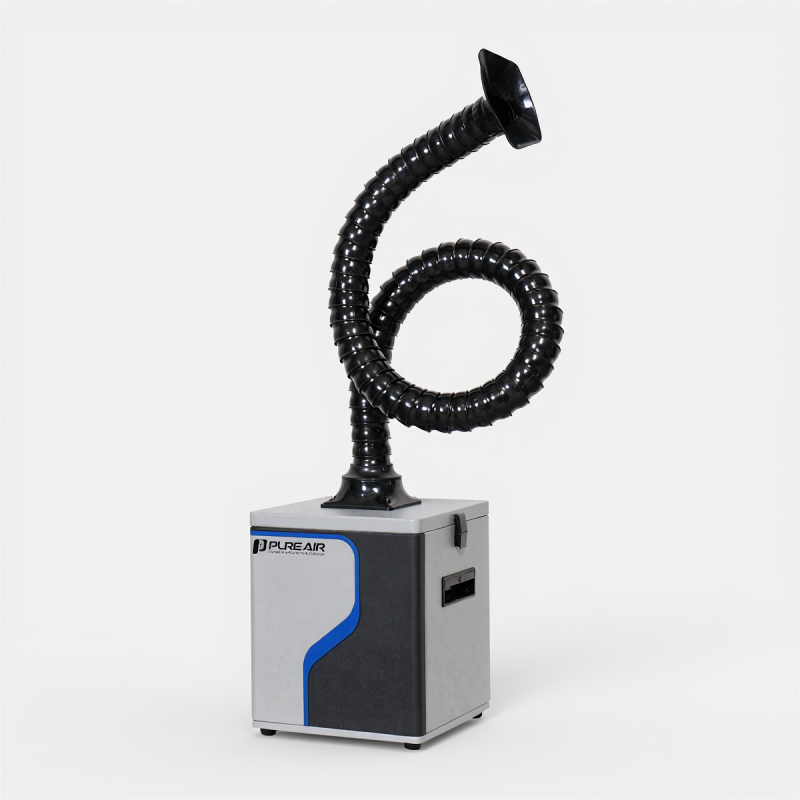 What’s Next?
Here are three practical metrics I recommend using when you evaluate systems: capture efficiency at source (measured with a particle counter), system airflow and static pressure (fan curve match), and total cost of ownership (filter life + energy + maintenance). If you score candidates against those three, you’ll pick a solution that really protects people — not just one that looks good on paper. I prefer solutions that also offer easy service access and clear monitoring readouts; they reduce errors and save time.
To wrap up, I’ll say this plainly: we can do better than patchwork fixes. I’ve seen modest investments pay off fast in cleaner air and fewer operator complaints. If you want a partner who respects real shop constraints and speaks plainly about trade-offs, check out PURE-AIR. We’ll walk the floor with you and make the numbers add up.